

The problem
1 in 3 leave school in England without a grade 4 (C) in GCSE English and maths
That is around 220,000 young people every year, and around 2 million over the last decade.
For too long, the answer has been: resit, repeat, try again. But Fairer Exams is asking whether the problem is not simply that young people are failing GCSE maths and English, but that the exam is failing to measure them fairly. When we change the format of the exam, many of those same children pass.
Here are some of the biggest issues:
Confidence
Being told you have failed English and maths GCSE does not stay on a results sheet. It can affect self-esteem, confidence and whether a young person believes they belong in education at all. Being told you have failed multiple times, makes things much worse.
Inequality
Young people with SEND, young people from lower-income families and those facing barriers to attendance are far more likely to miss out. The failure statistics for GCSE English and maths are shameful.
Resits
Resits are a condition of funding for many level 3 courses, making them compulsory after English and maths GCSE failure. A resit is not a second chance if the test stays the same. Too many young people are put back into the same format that failed to show what they could do the first time, with a persistently low pass rate averaging 21%. Each year resits cost around £338 million.
Mental health
Repeated GCSE failure can leave capable young people feeling anxious, ashamed and stuck. Assessment should help students move forward, not make them feel written off. The ripples from this can be felt in our families, communities, our mental health and employment statistics.
Lost Futures
Without a grade 4 pass in GCSE English and maths, doors to further education, apprenticeships and work can start closing before young people have had the chance to show what they can really do.
Stigma
Alternative routes are too often seen as lesser, even when they recognise real English and maths skills. Young people deserve pathways that carry confidence, credibility and respect. 85% of our respondents could not explain what are Functional Skills?
blocked progression
Grade 4 has become a gateway to college, training and work. If your child failed GCSE maths and English, they can be blocked from level 3 courses, college pathways, apprenticeships and career routes.
Hidden alternatives
Functional Skills show that many learners can succeed when English and maths are assessed in a more practical, applied way. But too often, this route is hidden behind GCSE failure.
Unequal outcomes
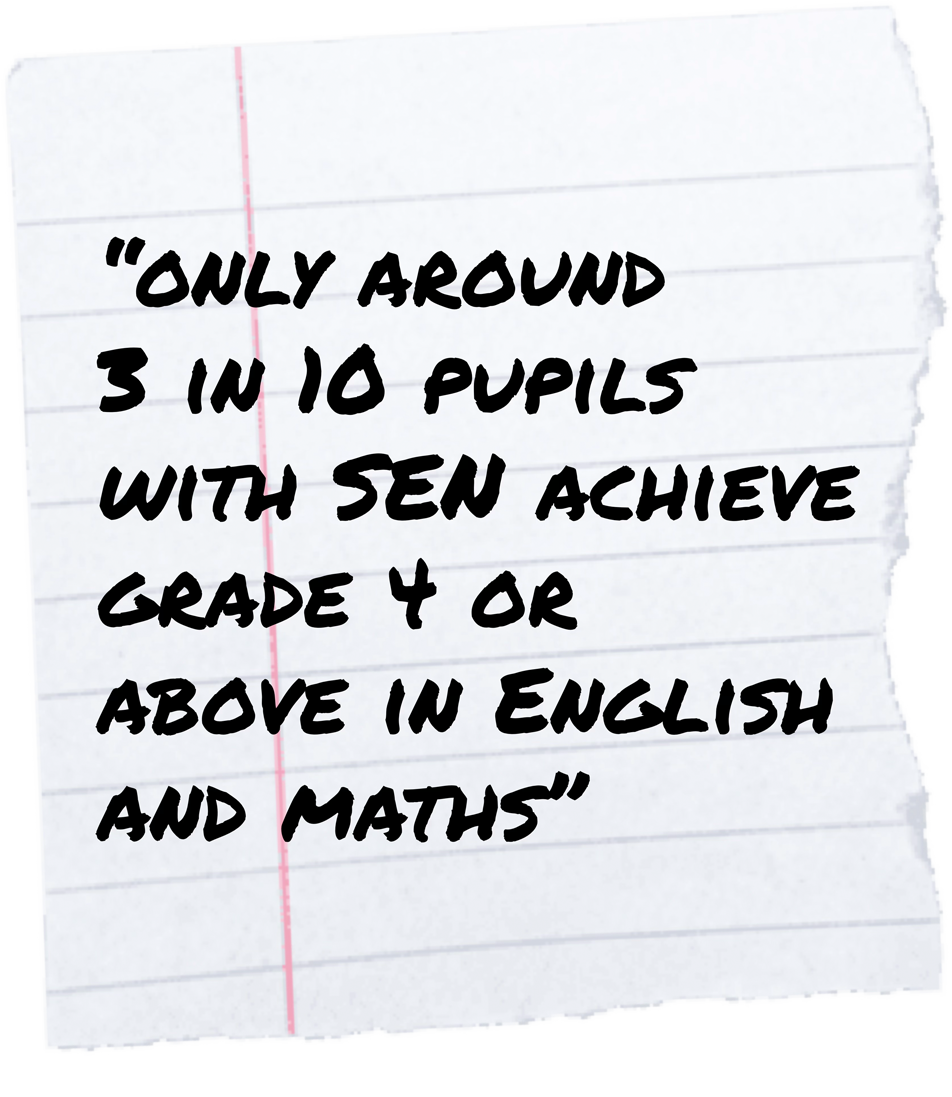
The current system does not affect everyone equally: only 3 in 10 young people with SEN and around 4 in 10 young people eligible for free school meals achieve a grade 4 in both English and maths GCSE. For pupils who are both SEN and eligible for free school meals, outcomes are even worse, with fewer than 2 in 10 achieving a grade 4 in both subjects.
Blocked progression routes
GCSE English and maths have become the gateway to further education, apprenticeships and work. Without a grade 4, young people can be blocked from Level 3 courses, college pathways, apprenticeships and career routes.
Mental health
GCSE failure does not stay on a results sheet; for many young people, it becomes part of how they see themselves. Repeated failure often lands on pupils already struggling with anxiety, low confidence, school avoidance, SEND, unmet needs or difficult experiences of education. No qualification should come at the cost of a young person’s mental health.
Family life
GCSE failure does not only affect the young person; it affects the whole family around them. Parents often carry the stress, worry, tutoring costs, battles for support and emotional fallout, while siblings and home life can also feel the strain.
Disengaged learners
GCSE failure does not only affect the young person; it affects the whole family around them. Parents often carry the stress, worry, tutoring costs, battles for support and emotional fallout, while siblings and home life can also feel the strain.
The cost of repeated resits

“ Long headline to turn your visitors into users “
For many young people, GCSE failure is not the end of the story. It is the start of a cycle: resit, repeat, try again. The average GCSE resit pass rate over the last five years has been around 21%, while English and maths resits for grade 3 students alone cost an estimated £338 million.